The Hotel's Silent Leak Isn't in the ADR, It's in Chargebacks
Sponsored content. Research, data selection, and editorial judgment are by Notitur. Figures without external sources are attributed to the company.
Quick answer: Kloutit uses AI to automate chargeback defense, the payment disputes on card transactions, and charges 20% of what it recovers, nothing if it loses. Its €540,000 seed round was signed by the CEOs of Stayforlong, Atrápalo, Destinia, and ByeTravel. It isn't a hotel-native provider: it's payments software that's moving into the sector.
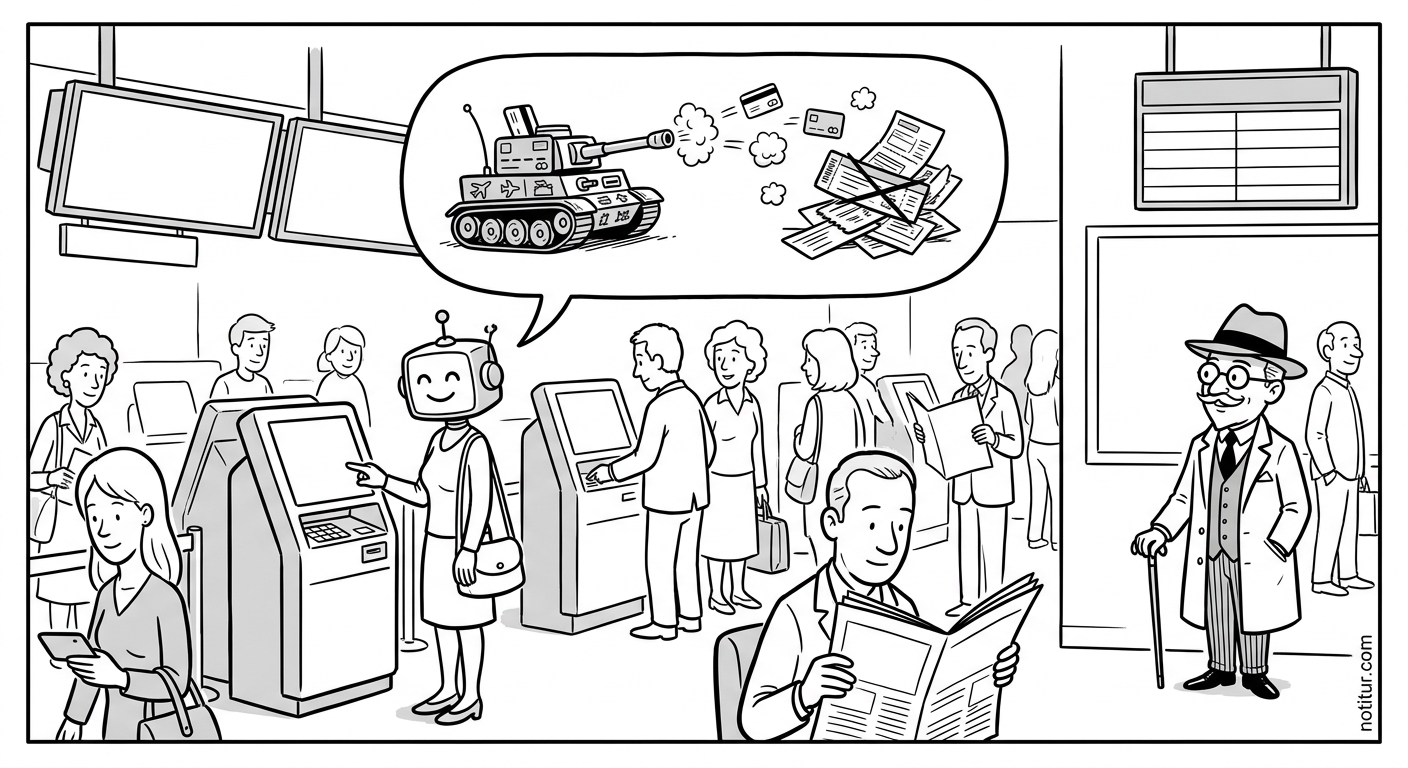
A guest checks in, pays by card, and leaves happy. Two months later, their bank reverses the charge because they claim they don't recognize the transaction. The hotel finds out late, someone in admin has to put together a written defense with evidence before the card network's deadline, and almost no one has that as their actual job. So it's lost by default, not because the case is weak.
That's a chargeback, and in travel it's especially ugly because the product was already consumed. The room was occupied, the flight departed, the tour was completed. There's no returning the goods.
Kloutit is a Catalan company from Terrassa that automates this fight with AI. And before anything else, one correction is needed: the brand is spelled Kloutit, with a K, not CloudTik.
What Exactly It Does
The entire cycle, without anyone at the hotel opening an Excel sheet:
- Detects the chargeback as soon as it arrives.
- Gathers the evidence, connecting to the payment processor and the CRM.
- Drafts the defense tailored to that specific case and submits it.
- Tracks the status until resolution.
Its literal promise is 100% personalized defenses in seconds. There's also a separate module, Kloutit Alerts, that integrates with Visa and Mastercard alerts to get the money back before the chargeback even exists.
In hospitality, my bet is there's room here, because a chunk of a hotel's disputes smells more like a misunderstanding over a non-refundable rate than fraud. That's my hypothesis, not their data: they don't publish any breakdown by dispute type.
On security, they claim ISO/IEC 27001 certification by OCA Global, GDPR compliance, and data centers within the European Union. For anyone giving them access to their payment gateway, that paragraph is the one to read first.
Who Put in the Money, Which Is the Interesting Part
Kloutit raised a €540,000 seed round in December 2024, led by Lanai Ventures and BStartup 10, Banco Sabadell's vehicle. So far, a normal Spanish round.
What's not normal is the list of business angels who joined:
| Investor | Role | Company |
|---|---|---|
| Luis Osorio Solé | CEO | Stayforlong |
| Francesc López | COO | Stayforlong |
| Raúl Morón | CTO | Stayforlong |
| Manuel Roca | CEO | Atrápalo |
| Ricardo Fernández | CEO | Destinia |
| Axel Serena | CEO | ByeTravel |
| Daniel Romy | Founder | Simplr |
Six of the seven are travel executives. Four run hotel booking businesses or online agencies. When the people who deal with this problem every day put their own money into someone claiming to solve it, that's a different signal from a generalist fund looking for AI exposure. The source is startupsreal, which published the full list.
Stayforlong, whose three executives are on that same round, also appears as a public client. And Atrápalo was in pilot mode at the time of the round.
Twenty Percent of What They Recover, Nothing Else
The commercial model is one of the cleanest I've seen in this category:
| Item | Price |
|---|---|
| Chargeback defense | 20% of the recovered amount, only if they win |
| Fixed fee, subscription, or lock-in | None |
| Trial | 14 days free, no card required, unlimited disputes |
| Kloutit Alerts | From €19 per alert received |
| Enterprise | Custom, with dedicated Success Manager |
Disputes filed during the trial incur no cost even if they're resolved later. The fact that the price is published on their website is already an anomaly in Spanish B2B software. That it's tied to results makes the internal business conversation very short: if it doesn't recover, it doesn't cost. It's the same logic that makes instant payments attractive for the independent hotel's treasury: it doesn't change the product, it changes who takes on the risk.
What's Not Published, and What They Say in Response
Kloutit is not a hotel technology provider. It's horizontal payments software sold to any merchant that accepts cards, and hospitality is one of its six verticals. I'd say it's the one they're pushing hardest in 2026, and I'm saying that from clues, not because they state it: it's the vertical that opens the homepage, it's where their investors come from, and it's one of the sectors named in the Sipay announcement. But it's still one of six.
That shows in what's published. The integrations they name are payment-focused: Adyen, Checkout.com, Klarna, dLocal, Mangopay, PayPal, Stripe, plus a native Shopify app and, since September, a deal with Spanish fintech Sipay. They talk about over 50 integrations, but the full list isn't published. And no public page names an integration with a PMS, channel manager, CRS, or booking engine.
I raised exactly that before publishing, and they responded. They say they have an integrator that connects over 8,000 technologies and an agnostic integration capable of hooking up any CRM and any PMS without the hotel writing a single line of code.
That integrator is Zapier, and they confirmed it to me. That's where the number comes from: it's the apps in their directory. And I think that's a better answer than the number, because it turns it into something you can verify yourself in two minutes:
If your PMS has a Zapier app, this connects without touching code. That's the verifiable path, and you check it yourself before sitting down with anyone.
I asked what happens with a PMS that isn't in that directory, and in hospitality there are quite a few. Their answer is it's not a problem either: they say they connect it anyway with what they call their agentic solution, and with no code on the hotel's side.
That second path you can't verify from the outside, so that's exactly what you need to see working in a demo, against your PMS and not a sample one. The difference between the two isn't marketing, it's who carries the risk if the connection fails: in the first, you know upfront, in the second, you're trusting them. It does fit, though, with the direction the whole sector is heading, where integrations between providers are already worth as much as the product.
They add that they already work with large hotel groups they can't name due to confidentiality, several in the Spanish top 5, and that Kloutit has travel-specific developments, including chargeback centralization for hotel groups. They also announce, for later, evidence scanning via mobile terminal.
That last bit is attributed and clearly labeled: the groups have no names, so there's no way to verify it from the outside, and the mobile terminal is roadmap, not product.
On volume, the company reports over 190 active clients in nine countries, with Wallapop, Cabify, Playtomic, Factorial, TaxDown, and Stayforlong among the public ones. That's company data reported by the press in February 2026, not audited.
My Takeaway
Chargebacks are the classic problem with no owner inside the hotel. Neither revenue, nor front desk, nor admin has it in their job description, so it's lost by default and no one measures it. The beauty of a success-based model is that it turns that hole into something you can test without a committee: no recovery, no charge.
The legitimate question isn't whether the AI drafting the defense works. It's whether a platform born for ecommerce understands the quirks of a hotel booking: the non-refundable rate, the no-show, the deposit, the minibar charge. They say yes, and that they already do it for several Spanish groups.
And with a model that only charges when it recovers, testing it is very cheap. You connect it, let the first batch of disputes run, and the results speak for themselves. Few software categories can be tried that way.
Quick questions
What is a chargeback?
What does Kloutit do?
How much does Kloutit cost?
Does it integrate with a hotel's PMS?
Who has invested in Kloutit?
Startups
The travel startups we follow, plus the ones surfacing in today's news.
- In today's news
- KloutitStartup catalana que automatiza con IA la defensa de contracargos de tarjeta para empresas de viajes y e-commerce.
- ShijiSu alianza con Rivalry Tech demuestra que el self-service en hoteles libera tiempo del personal para ventas de mayor valor.
- VorseeStartup suiza de IA que ha cerrado una alianza con HBX Group para llevar flujos de trabajo comerciales agénticos y pricing predictivo a los hoteles.
Was this article useful?
5.0 · 1 vote
The daily brief
Notitur in your inbox
One sharp travel-industry brief a day. Free.
Editorial content by Notitur. It may contain errors. Verify anything important with the original source.
This article may mention third-party products, companies or services for informational purposes. Notitur does not endorse them and is not responsible for them or for what they offer. Editorial content curated by the Notitur team.