Voice reading · ~5 minWelcome to the Notitur daily brief, your travel-industry recap. Today: World Cup 2026, F1, Smart Mobility, AIRE Ancient Baths Madrid, Corporate AI Travel Investment, and. The summer demand peak is here, but the industry is already looking ahead: the planning of future mega-events and investment in artificial intelligence are reshaping strategic priorities. While hoteliers manage peak occupancy with dynamic pricing, host cities for the 2026 World Cup and Formula 1 redesign their mobility, Madrid's luxury scene bets on wellness, and corporate capital seeks returns in travel-focused AI startups. This is not a blip, it is structural change.. Today's Brief. Mega-events put smart city mobility to the test. From the 2026 FIFA World Cup to Formula 1, tourism success is no longer decided inside the stadium or the circuit. The real battle for visitor experience happens on the streets, stations, and transport networks of host cities. The 16 World Cup host cities are redesigning their systems with sensors, big data, and integrated Mobility as a Service (MaaS) platforms. The challenge is not technological but operational: avoiding bottlenecks that ruin the arrival of thousands of travelers to hotels and venues. For hoteliers, the implication is direct: accessibility and travel times become a critical booking factor for events. According to Skift, the World Cup's tourism impact extends beyond host cities, non-host markets are seeing unexpected demand spikes, forcing a rethink of distribution and absorption capacity. Smart Travel News and Skift.. Hotels. Madrid doubles down on experiential luxury with a new wellness hub. Galería Canalejas is doubling down on lifestyle. Following the closure of Mad Gourmets, the complex's Food Hall will house an AIRE Ancient Baths, the luxury thermal bath chain. The project represents an investment of 21.5 million euros and will create 100 direct jobs. This is not just a spa, it is a statement about the direction of high-end urban hospitality: sensory experience is overtaking retail and dining as the anchor of mixed-use buildings. Hosteltur.. Mallorca says thank you... with a 39-meter banner. The Hotel Business Federation of Mallorca (FEHM) has installed a 39-meter banner at Palma Airport to continue its "Thanks for Visiting Mallorca" campaign. Behind the friendly gesture lies a political message: the hotel association wants to reassure tourists they are welcome amid heated debates on overtourism and illegal rentals. It is a large-scale PR move to counter regulatory noise. Preferente.. Airlines and Travel. Airlines react to the Middle East truce to stimulate demand. The end of hostilities in the Middle East has opened a window of opportunity that international airlines are eager to exploit. Carriers are launching aggressive promotional fares and increasing frequencies to destinations that had fallen off traveler radars. The challenge is not just filling seats, it is rebuilding traveler confidence in a still-perceived volatile region. Expect a price war on mid-haul routes in the coming weeks. Hosteltur.. AI in Travel. Corporate capital picks its winners in travel AI startups. The Lufthansa Innovation Hub has analyzed the AI investment strategies of major travel players: airlines, OTAs, hotel groups, and mobility companies. The report shows that corporations are betting heavily on AI startups that optimize dynamic pricing, offer personalization, and automate customer service. The trend is clear: big brands prefer to invest in or acquire rather than build in-house. Accelerated consolidation of the travel-tech ecosystem is coming. TNMT (Lufthansa Innovation Hub).. When AI plans the trip, your hotel is just an ingredient. An analysis by Hospitality.today delivers an uncomfortable warning: if artificial intelligence assembles the trip, your hotel ceases to be the destination and becomes a simple component in a recipe. And components can be swapped for cheaper ones. The implication for revenue management is brutal: brand loyalty erodes when an algorithm dictates the itinerary. Hoteliers who fail to build a differentiated value proposition beyond algorithmic comparison will lose the game. Hospitality.today.. What We Are Watching Mega-event planning for 2026-2027: how smart mobility initiatives evolve in the 16 World Cup host cities and F1 circuits. Direct impact on hotel bookings and flow distribution. AIRE Ancient Baths results in Canalejas: if the premium wellness model works as an anchor for luxury malls, expect replicas in other Spanish urban destinations. Airline strategy in the Middle East: the speed of demand recovery will set the tone for the winter season and carriers' ability to maintain fares. Destination campaigns against overtourism: after Mallorca's banner, other hotel associations might copy the format to defend their brand against regulatory pressure.. The summer peak is the present, but the industry is already playing the next game. Destinations that solve mobility for large events, hotels that shield themselves from algorithmic disintermediation, and brands that invest wisely in AI will lead into 2027. The rest should prepare to be just another ingredient. As we noted yesterday with JW Marriott Guadalajara apuesta por textiles Resuinsa para el descanso, the battle for the guest experience is fought in every detail. That is today's recap. Come back tomorrow for more on travel, artificial intelligence and travel tech. See you tomorrow on Notitur.
World Cup 2026, F1, Smart Mobility, AIRE Ancient Baths Madrid, Corporate AI Travel Investment, and · notitur.com
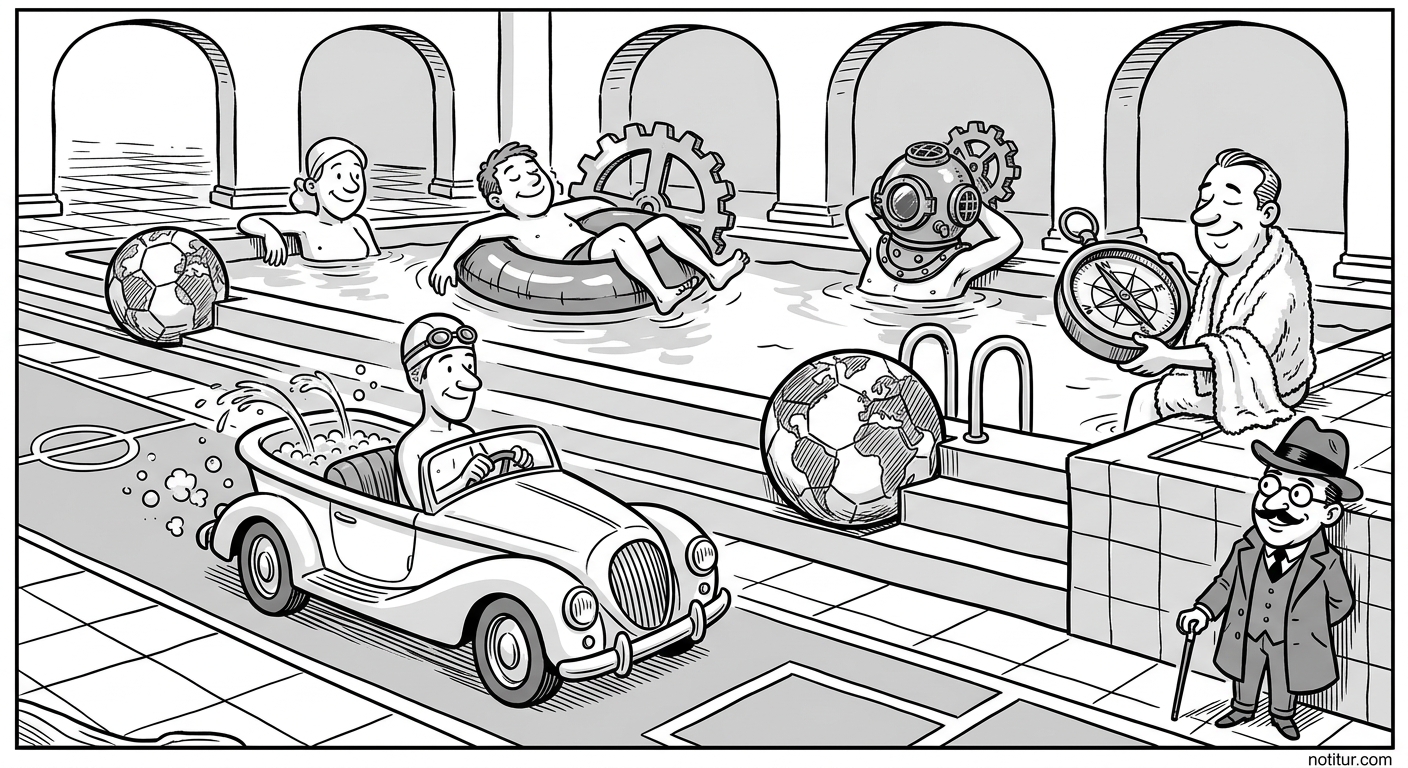
The summer demand peak is here, but the industry is already looking ahead: the planning of future mega-events and investment in artificial intelligence are reshaping strategic priorities. While hoteliers manage peak occupancy with dynamic pricing, host cities for the 2026 World Cup and Formula 1 redesign their mobility, Madrid's luxury scene bets on wellness, and corporate capital seeks returns in travel-focused AI startups. This is not a blip, it is structural change.
Today's Brief
Mega-events put smart city mobility to the test
From the 2026 FIFA World Cup to Formula 1, tourism success is no longer decided inside the stadium or the circuit. The real battle for visitor experience happens on the streets, stations, and transport networks of host cities. The 16 World Cup host cities are redesigning their systems with sensors, big data, and integrated Mobility as a Service (MaaS) platforms.
The challenge is not technological but operational: avoiding bottlenecks that ruin the arrival of thousands of travelers to hotels and venues.
For hoteliers, the implication is direct: accessibility and travel times become a critical booking factor for events.
According to Skift, the World Cup's tourism impact extends beyond host cities, non-host markets are seeing unexpected demand spikes, forcing a rethink of distribution and absorption capacity. Smart Travel News and Skift.
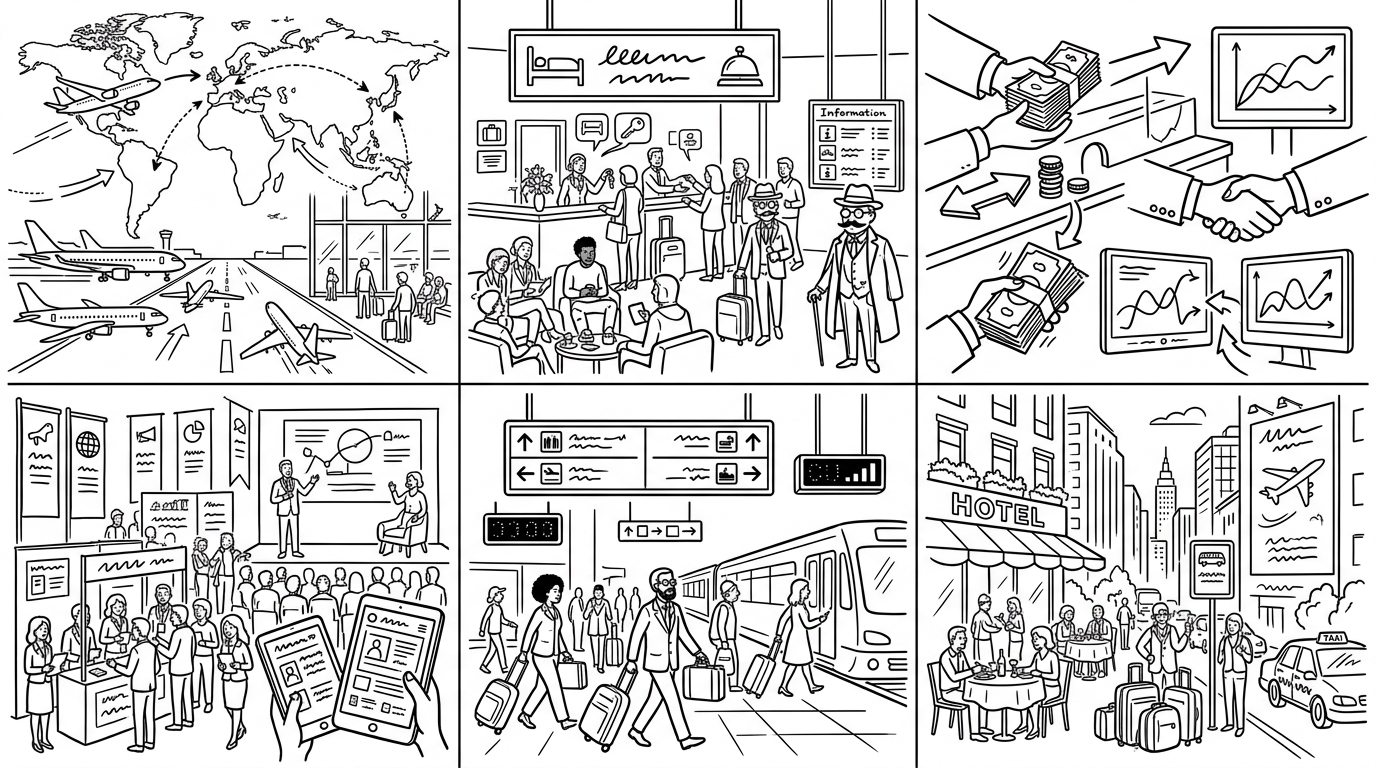
Madrid doubles down on experiential luxury with a new wellness hub
Galería Canalejas is doubling down on lifestyle. Following the closure of Mad Gourmets, the complex's Food Hall will house an AIRE Ancient Baths, the luxury thermal bath chain. The project represents an investment of 21.5 million euros and will create 100 direct jobs. This is not just a spa, it is a statement about the direction of high-end urban hospitality: sensory experience is overtaking retail and dining as the anchor of mixed-use buildings. Hosteltur.
Mallorca says thank you... with a 39-meter banner
The Hotel Business Federation of Mallorca (FEHM) has installed a 39-meter banner at Palma Airport to continue its "Thanks for Visiting Mallorca" campaign. Behind the friendly gesture lies a political message: the hotel association wants to reassure tourists they are welcome amid heated debates on overtourism and illegal rentals. It is a large-scale PR move to counter regulatory noise. Preferente.
Airlines and Travel
Airlines react to the Middle East truce to stimulate demand
The end of hostilities in the Middle East has opened a window of opportunity that international airlines are eager to exploit. Carriers are launching aggressive promotional fares and increasing frequencies to destinations that had fallen off traveler radars. The challenge is not just filling seats, it is rebuilding traveler confidence in a still-perceived volatile region. Expect a price war on mid-haul routes in the coming weeks. Hosteltur.
AI in Travel
Corporate capital picks its winners in travel AI startups
The Lufthansa Innovation Hub has analyzed the AI investment strategies of major travel players: airlines, OTAs, hotel groups, and mobility companies. The report shows that corporations are betting heavily on AI startups that optimize dynamic pricing, offer personalization, and automate customer service. The trend is clear: big brands prefer to invest in or acquire rather than build in-house. Accelerated consolidation of the travel-tech ecosystem is coming. TNMT (Lufthansa Innovation Hub).
When AI plans the trip, your hotel is just an ingredient
An analysis by Hospitality.today delivers an uncomfortable warning: if artificial intelligence assembles the trip, your hotel ceases to be the destination and becomes a simple component in a recipe. And components can be swapped for cheaper ones. The implication for revenue management is brutal: brand loyalty erodes when an algorithm dictates the itinerary. Hoteliers who fail to build a differentiated value proposition beyond algorithmic comparison will lose the game. Hospitality.today.
What We Are Watching
Mega-event planning for 2026-2027: how smart mobility initiatives evolve in the 16 World Cup host cities and F1 circuits. Direct impact on hotel bookings and flow distribution.
AIRE Ancient Baths results in Canalejas: if the premium wellness model works as an anchor for luxury malls, expect replicas in other Spanish urban destinations.
Airline strategy in the Middle East: the speed of demand recovery will set the tone for the winter season and carriers' ability to maintain fares.
Destination campaigns against overtourism: after Mallorca's banner, other hotel associations might copy the format to defend their brand against regulatory pressure.
The summer peak is the present, but the industry is already playing the next game. Destinations that solve mobility for large events, hotels that shield themselves from algorithmic disintermediation, and brands that invest wisely in AI will lead into 2027. The rest should prepare to be just another ingredient. As we noted yesterday with JW Marriott Guadalajara apuesta por textiles Resuinsa para el descanso, the battle for the guest experience is fought in every detail.
Quick questions
Why is smart mobility critical for event tourism?
Because the visitor experience starts at the airport and ends at the hotel. If transport collapses, the destination loses reputation and future bookings, regardless of what happens inside the stadium.
What impact does AIRE Ancient Baths' investment in Madrid have?
It is a 21.5 million bet on luxury wellness as an anchor for a mixed-use complex. It signals that premium urban hospitality is shifting from retail to sensory experience.
How is corporate investment in travel AI reacting?
Major airlines, hotel chains, and OTAs are investing in AI startups for pricing and personalization, preferring to buy or invest rather than develop in-house.
What does it mean that AI turns a hotel into a trip ingredient?
If an algorithm plans the itinerary, it can replace your hotel with a cheaper alternative unless you offer a unique value that is hard to compare automatically.
Why did Mallorca install a 39-meter banner at the airport?
The hotel association aims to counter overtourism rhetoric with a welcome message, putting pressure on the debate about illegal rentals and regulation.
Startups
The travel startups we follow, plus the ones surfacing in today's news.
In today's news
DeelPlataforma global de nóminas y compliance para equipos remotos, sus datos sobre vacaciones explican por qué agosto en España es un agujero negro comercial.
StardriftPlanificador de viajes con IA que encuentra y reserva vuelos hoteles y actividades en una sola conversacion
GuruHotelInfraestructura de reserva directa con IA para hoteles que crea webs de alta conversion y reduce dependencia de las OTAs
Editorial content by Notitur. It may contain errors. Verify anything important with the original source.
This article may mention third-party products, companies or services for informational purposes. Notitur does not endorse them and is not responsible for them or for what they offer. Editorial content curated by the Notitur team.
Notitur is an independent digest. It is not the official site of any brand mentioned. Content is editorial and produced with the support of AI, so it may contain errors. Verify anything important with the original source. This is not financial, legal or investment advice. Some links or blocks may be sponsored or affiliate. Trademarks belong to their owners. You can unsubscribe at any time with one click, and you can request access or deletion of your data at notitur.com/contact.
The daily brief
Notitur in your inbox
One sharp travel-industry brief a day. Free.
We use our own and third-party cookies. By continuing to browse you accept their use. More info