Spain opens data, Italy expands and email dominates
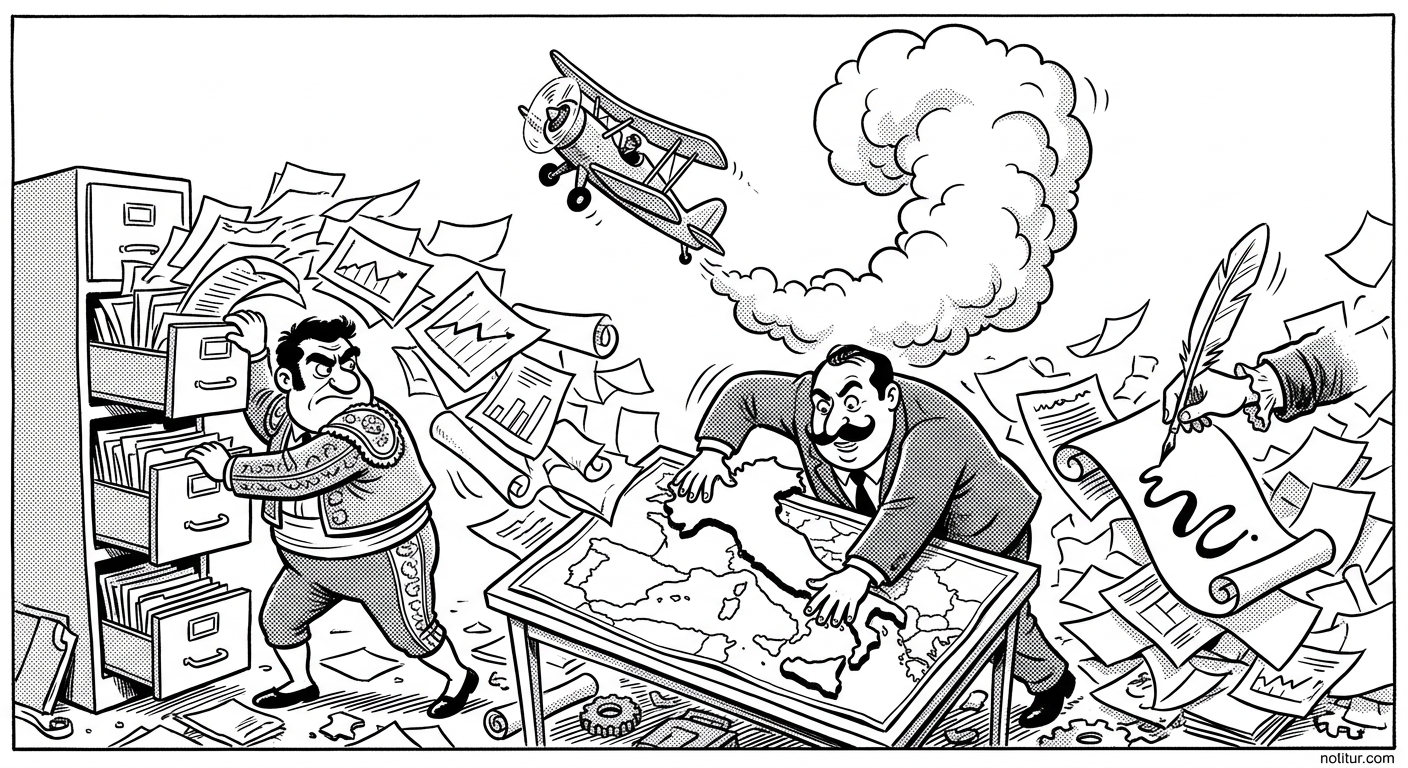
Europe is accelerating on multiple fronts this week, but the reality is more nuanced than headlines suggest. Spain opens its data door, Italy becomes a battleground for international chains, SAF hits the wallet of airlines and travelers, and email remains the silent weapon of hotels serious about direct sales. What you see today are trends simmering for months, but now taking operational shape.
Today's brief
Spain launched LINX, its tourism data-sharing platform backed by EU funding. Driven by SEGITTUR and the Ministry of Industry and Tourism, this infrastructure aims to let hotels, airlines, destinations, and OTAs share data securely without losing data sovereignty. Ambitious, yes. But the real question is whether fragmented Spanish operators will actually climb aboard.
- Platform is part of the Recovery, Transformation and Resilience Plan funded by Next Generation EU.
- LINX aligns with EU data strategy, designed for innovation and sustainable tourism management.
- Secure data-sharing is the engine tourism needs to make informed real-time decisions.
Hyatt and IHG launch 7 new projects in Italy, betting hard on a market that won't slow down. Italy is no longer just a mass destination, it's where the big four compete at cruise speed. Hyatt opens two flagships (Regency Rome Central with 238 rooms in 2026 and Park Hyatt Taormina in 2028), while IHG plants four more flags including the Staybridge Suites debut. Since 2019, Hyatt has quadrupled rooms in Italy, IHG counts 32 operating and 20 in pipeline. This isn't expansion, it's tactical invasion.
- Hyatt Regency Rome Central: 238 rooms, opening 2026, strategic center location.
- Park Hyatt Taormina: luxury, 2028, double bet in Sicily where premium still pulls strong.
- IHG adds Crowne Plaza Milan NoLo, Staybridge Suites (Italy debut 2027), Hotel Indigo Apulia Alberobello (2028).
Implication: Italy demands global attention now. As we noted yesterday, Italy remains a magnet for hotel investment that will keep pulling through the year.
Revenue and Distribution
Email remains the most effective direct channel for hotels, but few know how to weaponize it properly. It's no secret email converts better than social in hotel sales. What changes is that automation and segmentation are no longer optional: integrating PMS data with booking engine to send the right message to the right guest at the right time is what separates profitable directs from burned-out campaigns. The temptation for volume is still there, but it kills the most reliable direct capture channel.
- Automation and segmentation by guest type and origin multiplies email ROI.
- PMS + booking engine integration is table stakes now, not luxury.
- Saturation and poor targeting destroy ROI faster than miscalculated pricing.
Given the summer booking peak underway and less than 5 days until Independence Day in the US (strong domestic travel holiday), chains capturing American traffic should have segmented email campaigns by origin already live. Those who wait for last-minute bookings lose ground.
 notitur.com
Airlines and SAF
SAF becomes mandatory across Europe from 2025 at 2% blending, but cost remains a wall. EU regulation is clear: sustainable aviation fuel is required. The escalation is aggressive: 2% in 2025, 70% by 2050. The problem isn't regulatory will, it's that SAF still costs 3 to 6 times more than conventional kerosene, which will directly pressure ticket prices, especially for low-cost carriers where fuel is a key variable cost line. The EU offers financial support covering up to 95% in some cases, but it's insufficient and temporary.
- Mandatory blending: 2% in 2025, phasing up to 70% by 2050.
- Price gap: SAF 3 to 6 times costlier than fossil fuel.
- Impact: higher fares, especially on short-haul routes where margins are already razor-thin.
This directly hits the low-cost vacation packaging that moves millions of Europeans to sun-and-beach destinations in summer. Less last-minute demand could mean greater seasonal pressure on hotels from shifts in booking behavior.
Hotels and Sustainability
Deleite Wear closes the textile circularity gap in hospitality with numbers that speak for themselves: 3,000 liters of water saved per shirt. This Spanish startup transforms hotel waste into new uniforms via upcycling. One uniform this way also avoids 645 kg of CO2. Won Traveling for Happiness in 2026. This isn't greenwashing: it's traction on a real pain point for hotels (what to do with worn clothing) that also hits aesthetics and operations (fresh uniforms without baseline impact). Impact Tailors moves in the same direction, promoting sustainable uniforms in tourism and events where 30 million uniforms are produced daily globally.
- Textile upcycling for hotels: water savings equal to a month of household consumption per garment.
- Traveling for Happiness certification: validation of impact model.
- Market: 30 million uniforms produced daily globally, almost all destined for waste.
For hotel chains, this offers real sustainability narrative (not empty statements), cuts waste disposal costs, and connects with ESG without theater.
Deals and Alliances
Fuerte Group partners with Hilton to land in Cancun with Curio Collection. Amàre Cancun Adults Only All-Inclusive Resort becomes Curio by Hilton in October 2026. Textbook consolidation: Fuerte wanted Mexico, Hilton wanted to strengthen all-inclusive in Caribbean under a differentiated brand. Curio brings design positioning and lifestyle segmentation that Fuerte operates. Bookings open this summer through Hilton channels. Expands Hilton's all-inclusive portfolio in one of its key markets: Latin America and Caribbean drive stable post-pandemic traction.
- Existing property conversion (Amàre) under Curio flag.
- October 2026 opening, bookings open summer 2024.
- Adults-only all-inclusive: resilient Caribbean segment.
Cybersecurity and Agency Operations
Spanish travel agencies launch technology center to defend against digital fraud. CEAV is driving training tools, certification, and awareness on cybersecurity aimed at SMEs, micro-enterprises, and large groups. Agency sector is frequent target (card data, booking system access, impersonation). The center seeks to level defensive capability across a fragmented and vulnerable ecosystem. Not regulation, it's sectoral self-defense against real threat.
- Technology center with training and certification tooling.
- Agency sector: highly vulnerable to digital fraud and cyberattacks.
- Focus: educate SMEs and micro-operators carrying tight IT budgets.
Startups
The travel startups we follow, plus the ones surfacing in today's news.
- In today's news
- Deleite WearStartup española que transforma residuos textiles de hoteles en uniformes sostenibles mediante suprarreciclaje, ahorrando 3.000 litros de agua por prenda y reduciendo emisiones en economía circular.
- KloutitFintech que automatiza la defensa y recuperación de contracargos con IA, también para viajes y hospitality.
- ControláAutomatización para hoteles que gestiona climatización, energía y operaciones para reducir consumo y costes.
What we're watching
- LINX adoption across Spanish sector: how hotels climb (or don't) onto community data platform in coming weeks. Success hinges on integration speed with existing systems.
- SAF pricing through summer-fall: whether 2025 mandate accelerates production and margin compression, or if it stays a barrier. Will shape air pricing during peak season.
- All-inclusive deal closes in Caribbean: Fuerte-Hilton opens window. Expect more consolidation in luxury-all-inclusive segment where Meliá, Barceló, and RIU dominate.
- Attacks on Spanish agencies: if cybersecurity center announcement coincides with spike in reported incidents, signal of elevated sectoral alert.
Today clarifies three dimensions of European tourism: data (LINX), assets (Italy and Caribbean), operating costs (SAF). Those who move fast on email automation and data-sharing adoption will have edge in peak season. Those who look away, won't.
Quick questions
What is LINX and how does it help Spanish tourism?
Why are Hyatt and IHG expanding so fast in Italy?
How can hotels make email marketing more profitable?
Was this article useful?
The daily brief
Notitur in your inbox
One sharp travel-industry brief a day. Free.
Editorial content by Notitur. It may contain errors. Verify anything important with the original source.
This article may mention third-party products, companies or services for informational purposes. Notitur does not endorse them and is not responsible for them or for what they offer. Editorial content curated by the Notitur team.