Italy booms, SAF costs rise, and Mediterranean cruises grow 50%
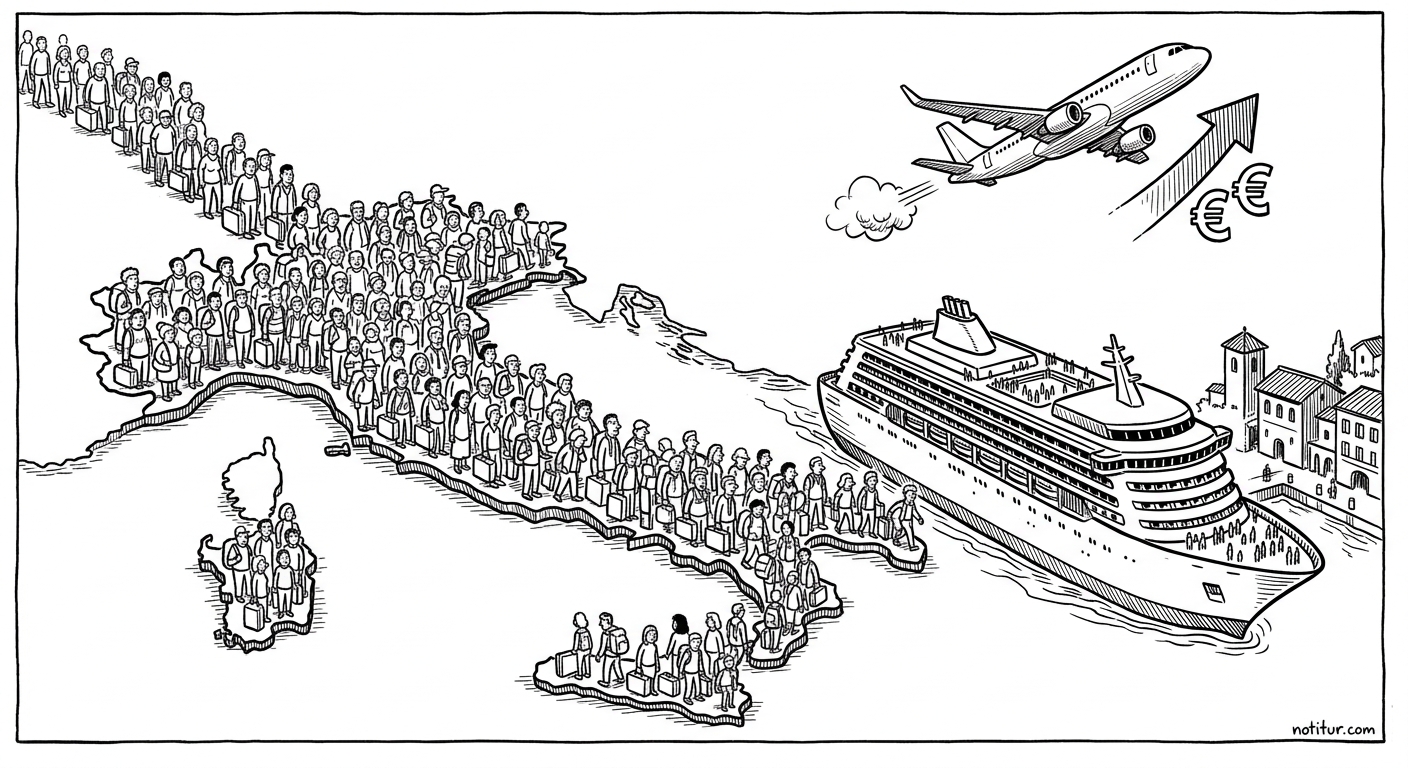
Italy is once again the stage for a hotel race that sums up the appetite of major chains across Europe, while sustainable aviation fuel stops being an environmental promise to become a cost line item that will likely end up in the passenger's ticket. Meanwhile, the Mediterranean cruise market consolidates its second global position with 50% growth since 2019.
Hotels: Italy attracts international investment at accelerated pace
Hyatt and IHG are launching seven new projects in Italy, consolidating the country as a priority growth market in Europe. The move is no accident: Italy ranks high on both groups' expansion strategies with projects in first-tier urban and leisure destinations.
Hyatt Hotels Corporation is opening new properties in Rome and Taormina, while IHG Hotels & Resorts expands in Milan, Alberobello, and Turin, mixing new construction with conversions of existing buildings. The pattern is telling: both chains bet on mixing core urban (Rome, Milan) with high-value leisure destinations (Sicily, Apulia) during Europe's summer booking peak.
This matters because Italy remains underexploited in modern hotel management relative to its tourism appeal. Each new international chain opening in a destination like Taormina or Alberobello shifts revenue that local operators or small chains once captured. RevPAR in these zones tends to improve with international brands, but margins for Italian operators and owners tighten.
Cruises: Mediterranean holds second place globally with 6 million passengers forecast for 2026
The Mediterranean will represent 15% of global cruise capacity in 2026, moving nearly 6 million passengers, a 50% increase from 4 million in 2019. According to industry data, global capacity will reach 40 million passengers this year, with the Caribbean as the dominant region but the Mediterranean solidly in second place.
Context matters: after the 2020-2021 pause, the Mediterranean has recovered capacity steadily. Spain, Italy, France, and Greece see rising disembarkations in peak season, straining port infrastructure and creating friction with cities (Barcelona continues restricting itineraries). From a hotel revenue perspective, the cruise passenger doesn't sleep in an urban hotel but consumes dining, excursions, and retail at ports. For destinations like Palma, Civitavecchia, or Mykonos, this 6 million figure represents direct competition for tourist spending dollars.
 notitur.com
Aviation: sustainable fuel enters ticket pricing as regulatory cost
Sustainable aviation fuel (SAF) has stopped being a corporate initiative to become a mandatory cost item in European airlines' ledgers, with direct impact on fares. Hosteltur's analysis poses an uncomfortable question that revenue managers and hotel directors must watch: what will travelers pay for each real environmental advance.
Today, SAF costs significantly more than conventional kerosene. The European Union imposes mandatory blend mandates that will only grow. Airlines cannot absorb this difference indefinitely without passing it to the ticket. This means:
- Higher cost for European domestic flights and short routes, where SAF weighs more on operating margins.
- Pressure on leisure travel demand and price-sensitive vacation packages.
- Relative advantage for alliances and airlines with SAF financing access and long-term supplier deals.
For hotels and OTAs, the effect is clear: the air cost of the vacation package rises, making it more likely the traveler gives up extra nights or downgrades accommodation. We continue to see pressure on direct channel control, and now there's added pressure from above on total trip cost.
Sustainability: hotel uniforms enter circular economy
The hotel industry is beginning to close the textile loop on its uniforms through companies like Deleite Wear and Impact Tailors, which transform discarded garments into new uniforms and measure ESG impact. The movement reflects a shift in how hotels manage sustainability: no longer as marketing argument but as operational change that reduces long-term cost.
Deleite Wear, awarded Traveling for Happiness in Sustainable Leadership, transforms luxury hotel textiles into uniforms for new teams. Impact Tailors offers a broader model based on ecodesign, used garment collection, and ESG footprint measurement. For large chains, this represents both raw material savings and an opportunity to engage environmentally conscious travelers. Not revolutionary, but telling: when the cost of operational sustainability drops, hotels adopt it. When it costs more, they leave it for the press release.
What we're watching
- SAF and pricing across European summer: in the coming weeks we'll see if airlines already pass fuel costs to fares during peak summer booking. July-August demand data will be revealing.
- Hyatt and IHG expansion in Italy: monitor whether other groups (Marriott, Hilton) accelerate projects in Italy or if the market saturates. RevPAR in destinations like Taormina and Alberobello will signal real viability.
- Cruise pressure on Mediterranean ports: Barcelona and other cities are adjusting quotas. Watch if other ports (Valencia, Palma) advance restrictions that channel demand to Greek or Turkish destinations.
Conclusion
Italy is today the symbol of the sector's contradiction: while international chains accelerate hotel investment, sustainability costs rise in aviation and cruise competition grows. The European summer traveler pays more for the flight, has fewer local accommodation options, and must compete with cruises for port experiences. For operators, this is the opportunity to differentiate with dynamic revenue management and clear direct offers. For OTAs, it's added pressure: if total trip cost rises, travelers become more price-comparison savvy. The peak summer window for northern Europe is happening now.
Quick questions
Why are international hotels expanding so fast in Italy?
How does SAF affect airline ticket prices?
What does the 50% growth of Mediterranean cruises mean for tourism?
Was this article useful?
The daily brief
Notitur in your inbox
One sharp travel-industry brief a day. Free.
Editorial content by Notitur. It may contain errors. Verify anything important with the original source.
This article may mention third-party products, companies or services for informational purposes. Notitur does not endorse them and is not responsible for them or for what they offer. Editorial content curated by the Notitur team.