1,400 hotels suing Booking, agentic AI arrives, and hospitality reclaims direct channel
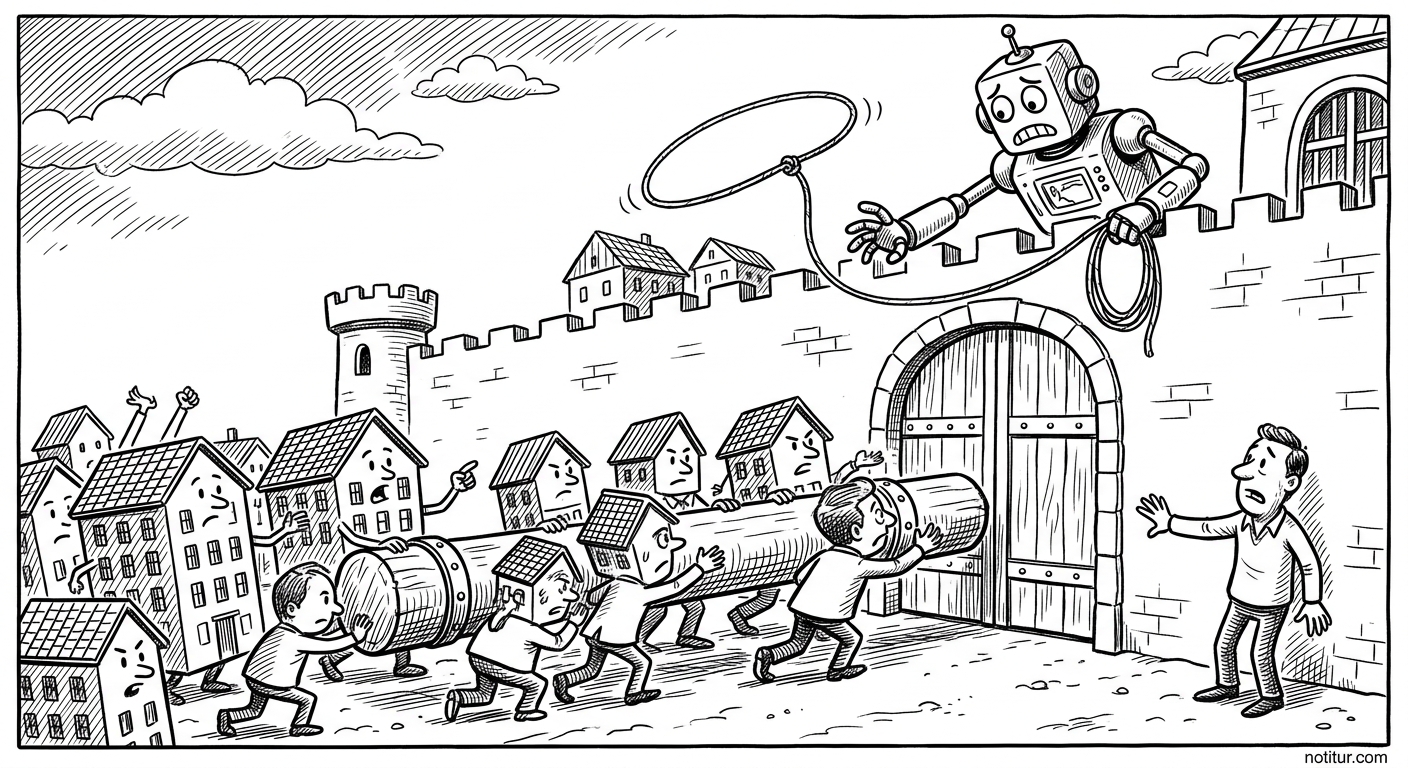
The global hotel industry is reaching a breaking point: the battle to recover margins against OTAs escalates to new dimensions, artificial intelligence begins automating decisions once made by entire teams, and brands demand control of their own digital ecosystem they surrendered to third parties years ago. In the middle of peak European summer booking season, these three converging forces are redefining who makes pricing and distribution decisions.
Today's brief
Over 1,400 Spanish hotel companies are preparing a massive collective lawsuit against Booking over price parity clauses that have limited their commercial freedom for years. The initiative, now in final preparation phase, marks an unprecedented escalation in the conflict between hotels and the dominant OTA. These clauses forced properties to avoid offering lower prices on their own websites than on Booking, a restriction that was partially banned by European regulators but whose consequences continue eroding sector profitability. Smart Travel News
What matters is not just the number of plaintiffs but the timing: as hotels seek to recover margin, they are investing in proprietary platforms and technology to break free from OTAs. This is a power battle whose outcome will redesign the entire tourism distribution chain over the next 24 months.
Agentic artificial intelligence (capable of making autonomous decisions) will arrive by 2036 as the central axis of tourism distribution, according to a PhocusWire and RateHawk report identifying ten transformative trends for the next decade. The report, based on industry expert analysis, signals that AI will not just recommend destinations: it will execute bookings, manage itineraries, and make changes without human intervention. Today's revenue managers manually adjusting prices will become supervisors of AI systems learning from millions of transactions. Smart Travel News
Another key finding: demand will fragment even further. Large homogeneous mass tourism segments will yield to increasingly specialized niches driven by influencers and social media communities. Suppliers still betting on one-size-fits-all pricing and one-to-all distribution will be out of the game.
 notitur.com
Hotels: Technology, pricing, and margin recovery
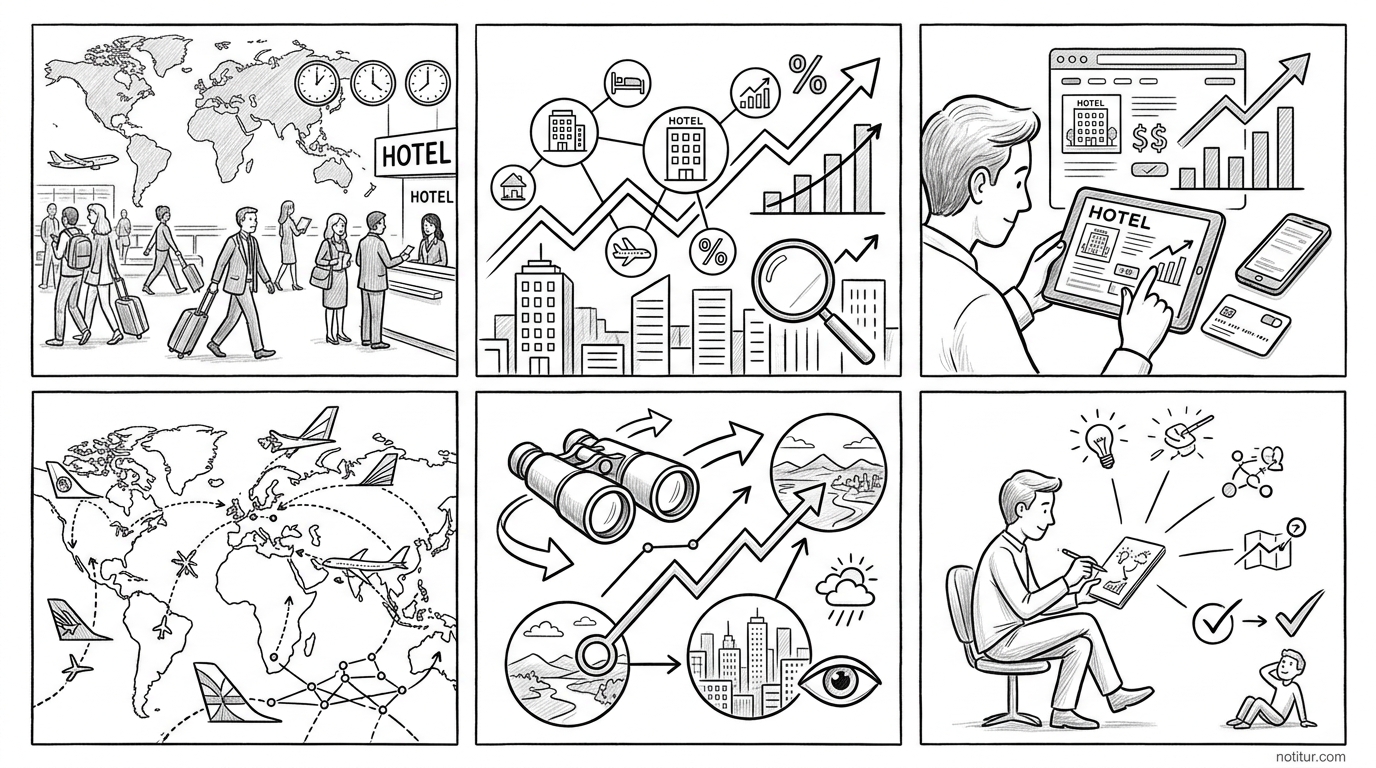
Three technology moves are accelerating simultaneously to return power to hotel chains over their own digital ecosystem. ITH and Growtur are developing positioning strategies in AI responses (when a user asks ChatGPT or Gemini where to stay in Barcelona, your hotel appears). Dataria launches its "Time Machine," allowing revenue managers to check in real time what competitors were doing on the same date last year or three years ago: historical compset context for smarter pricing. And eMascaró releases VENTO DXP, a platform that returns full control of the direct channel to hospitality brands, without depending on third parties for their digital ecosystem. ITH and Growtur, Dataria, eMascaró
This is not cosmetics. A revenue manager who yesterday needed weeks to analyze compset historical data now accesses pricing patterns in seconds. A hotel that two years ago needed OTAs for visibility must now be present in AI responses because that is where new traveler generations begin their search. And a brand that for years surrendered its digital experience to Booking or Expedia now reclaims direct customer interaction. Meliá Hotels International reinforces this trend of strength recovery: it ranks 17th in the Merco Empresas 2026 ranking, improving four positions and returning to the top 20 for the first time since 2019, consolidating corporate reputation after years of restructuring. Nexotur
Airlines: Strategic expansion and distribution networks
Air Europa launches Madrid-Johannesburg with over 92,000 annual seats, consolidating Barajas' role as a continental hub toward Africa while betting on a distribution model connected to its international network. The route is strategically timed for peak summer: it allows European tourists to access South Africa with seamless Madrid connection, optimizes connectivity to Latin America also from the hub, and positions the carrier on a long-haul corridor where summer demand peaks. Nexotur
What we are watching
- Expected ruling on hotel mass lawsuit against Booking: how European regulation will pressure OTAs to eliminate or reshape restrictive clauses. Timeline: next 6 months.
- Adoption of agentic AI in revenue management systems: how many hotels will integrate autonomous decision tools before Q4 2026. Early startups with traction will move this quarter.
- Visibility in AI Overviews and AI responses: the battle to appear when ChatGPT, Gemini, or Perplexity recommend destinations. ITB, WTM, and Phocuswright Conference (November 16-19 in Fort Lauderdale) will bring new perspectives on this emerging metric.
- Direct channel margin recovery: how much incremental margin hotels gain by selling direct without OTA commission. Expect first quarterly reports mid-July.
In 30 seconds
- Meliá returns to Spain's top 20 reputation ranking, improving four positions in Merco Empresas 2026 after years of corporate restructuring. Nexotur
- Air Europa adds 92,000 annual seats Madrid-Johannesburg, leveraging Barajas as hub to Africa and Latin America. Nexotur
- Hybrid AI captures hotel overflow: solutions automating response to accommodation requests during demand peaks. Smart Travel News
- Barcelona feels pressure from new cruise tax: potential 30-euro charge per call, 500% increase in two years, warns WTTC. Nexotur
---
Peak European booking season is witnessing a redistribution of power across the industry. Hotels stop being passive players in OTA hands: they recover data, recover pricing, recover direct customer. OTAs, in turn, face a mass lawsuit questioning the viability of their restrictive models. And AI does not come to simplify: it comes to automate decisions that once required human judgment. Industry professionals still operating in three months as they did two weeks ago will be running backward. As we flagged in our previous brief, agentic AI is not future, it is accelerated present. What changes today is who controls it: tech builders, hotels, or distribution platforms. For now, first movers win.
Quick questions
Why are 1,400 hotels suing Booking?
What is agentic AI and when will it reach tourism?
How can hotels regain control of their direct channel?
Was this article useful?
The daily brief
Notitur in your inbox
One sharp travel-industry brief a day. Free.
Editorial content by Notitur. It may contain errors. Verify anything important with the original source.
This article may mention third-party products, companies or services for informational purposes. Notitur does not endorse them and is not responsible for them or for what they offer. Editorial content curated by the Notitur team.